
· 3 min read
Edge AI on the Wing
Real-time computer vision and noise suppression for autonomous drones.
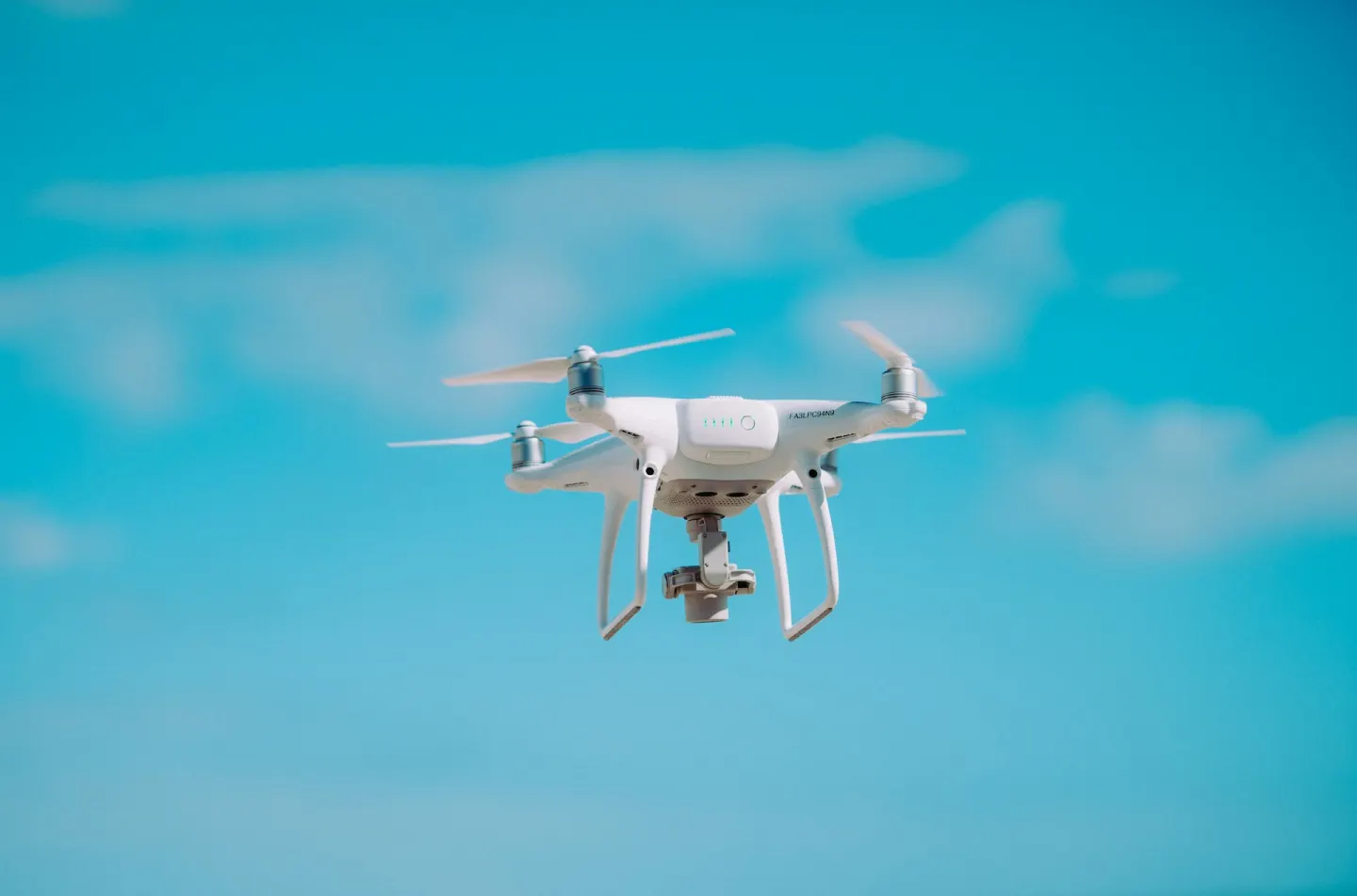
Test datasets are clean. Real datasets from hangars are not. Optics hit harsh overhead lights, glare off sheet metal, rivet lines, and deep shadows. Standard computer vision models fail here, regularly flagging reflections or flush rivets as structural cracks.
If a ten-minute flight forces a technician to clear thirty false alarms, the system fails. It just creates extra work.
Throwing a larger model at the problem misses the point. Streaming 4K video to cloud GPUs burns bandwidth, spikes costs, and adds latency. Real-time operation requires compute on the hardware, which means stripping out environmental noise before running classification models on low-power edge chips.
A paper in Nature Scientific Reports took a pragmatic approach. Instead of relying purely on deep neural networks, the authors paired lightweight upstream image filters with a two-stage classification framework using Optimized Laser Simulator Logic and fuzzy inference.
Scrubbing surface noise upfront delivers high-accuracy defect detection directly on constrained hardware.
Here is how that data pipeline is built and how to apply those principles to edge AI architecture.
Upstream data reduction
Raw video ingestion demands strict bandwidth and latency controls. Feeding uncompressed 4K streams at 30 or 96 frames per second directly into an edge inference engine exhausts board memory and triggers thermal throttling. Maximizing pipeline throughput requires aggressive upstream data reduction prior to feature extraction.
Volumetric frame reduction hits at the ingestion layer. Sequential frame processing at high frame rates yields high visual redundancy during slow translation along the airframe. Downsampling temporal resolution to 1 frame per 60 drops frame throughput by 98.3% while maintaining spatial coverage of the inspection vector.
Background spatial dimensions contain zero diagnostic value. Peripheral elements like structural hangar trusses, ground support equipment, and ambient lighting zones inflate array size without adding signal. The pipeline strips color space overhead by mapping 24-bit RGB matrices down to single-channel 8-bit grayscale grids, followed by a targeted spatial crop that isolates a 400 × 400 pixel window around the target surface area.
Spatial gradients across the normalized 400 × 400 intensity array pass through high-pass spatial filtering to compute local intensity gradients and extract surface contours. Isolating high-frequency edge vectors narrows candidate regions down to material discontinuities like cracks, structural dents, surface scratches, and oxidation zones.
Eliminating high-dimensional matrix overhead upstream bounds memory consumption, keeping frame processing latency within real-time limits on low-power edge accelerators without dropping telemetry frames.
Noise filtering with Optimized Laser Simulator Logic
Passing raw spatial contours straight into a neural net classification layer fails in industrial environments. Ambient glare, metallic reflections, and structural rivet lines generate high-frequency edge gradients that mirror real material defects. Running standard object detection across unfiltered intensity matrices floods downstream systems with false positives.
Suppressing non-systemic surface noise requires an upstream algorithmic filter before candidates hit the classifier.
Using an Optimized Laser Simulator Logic stage models surface reflections dynamically. The algorithm projects simulated intensity vectors across the target grid, tracking reflectivity variance and local gradient spikes. Structural features like flush rivets present symmetrical, predictable gradient distributions, while surface glare produces unbounded saturation blocks. The filter flags and subtracts these predictable artifacts directly from the feature map.
The remaining irregular edge vectors pass to a two-stage fuzzy inference classifier. Fuzzy logic handles the ambiguity of real-world materials where boundary conditions between noise and true defects are non-binary.
Linguistic variables set across membership functions evaluate candidate contours against specific surface geometry metrics:
- Cracks exhibit high linearity and narrow spatial width with sharp local gradient transitions.
- Scratches show shallow depth profiles with high directional variance.
- Oxidation zones display dispersed spatial clustering and non-uniform boundaries.
- Dents present gradual intensity gradients across a broad surface area deformation with continuous curvature.
Decoupling noise suppression from structural classification bounds model complexity. Filtering reflection artifacts and hardware geometry upstream keeps classification logic deterministic, maximizing inference speed on resource-constrained UAV compute platforms.
Production trade-offs
Building reliable edge AI systems comes down to resource management.
End-to-end deep learning models are easy to prototype, but pushing unconstrained neural nets to low-power hardware hits immediate infrastructure bottlenecks. When devices operate under strict compute limits, battery constraints, and latency thresholds, raw model capacity ceases to be the primary metric of success.
Hybrid architectures solve this. Pre-processing image feeds with targeted algorithmic filters strips out environmental artifacts upfront. Lowering the payload burden on downstream classifiers stabilizes frame throughput, prevents thermal throttling, and conserves battery life during flight operations.
Looking ahead, UAV visual inspection is moving toward combining lightweight preprocessing with on-device neuromorphic chips and micro-vision transformers. Hardware-aware data reduction paired with adaptive spatial filtering remains the most viable blueprint for real-time computer vision in unmanaged industrial environments.